
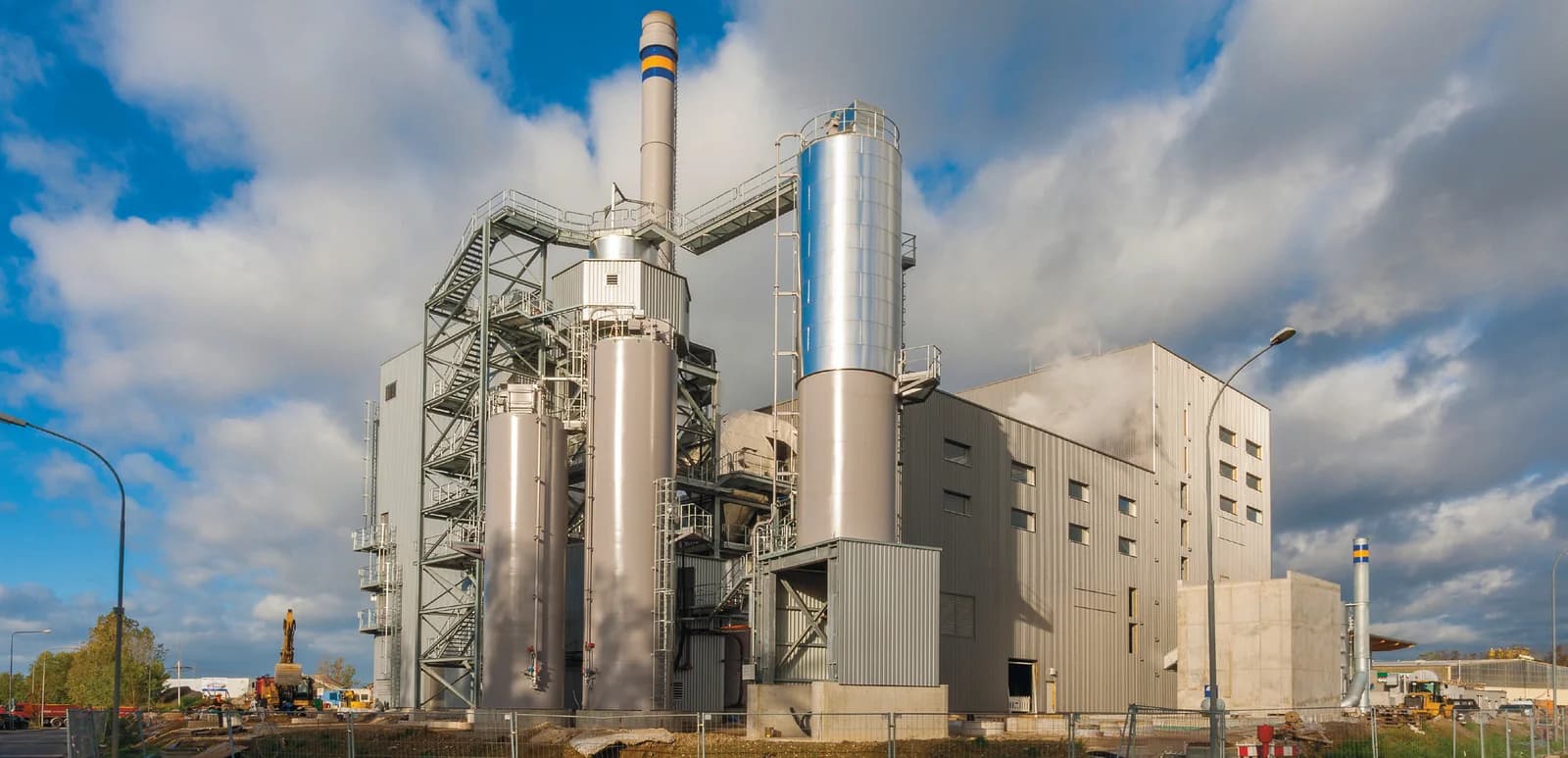
In Wiesbaden, a German energy supplier generates electricity and district heating from waste wood – power-led in summer, heat-led in winter and with multi-stage flue gas cleaning.
Thermal input
Steam output
Electrical output
Challenge
Different demand in summer and winter.
A German energy supplier operates a biomass CHP plant in Wiesbaden that generates electricity and district heating from waste wood. The requirements on the energy supply change with the seasons: less heat is needed in summer, while demand for district heating rises sharply in winter.
The plant therefore had to combine two goals: the most efficient possible power generation and a reliable heat supply. At the same time, the statutory emission limits had to be met reliably – even when burning waste wood with differing levels of contamination.
Solution
A plant that adapts to energy demand.
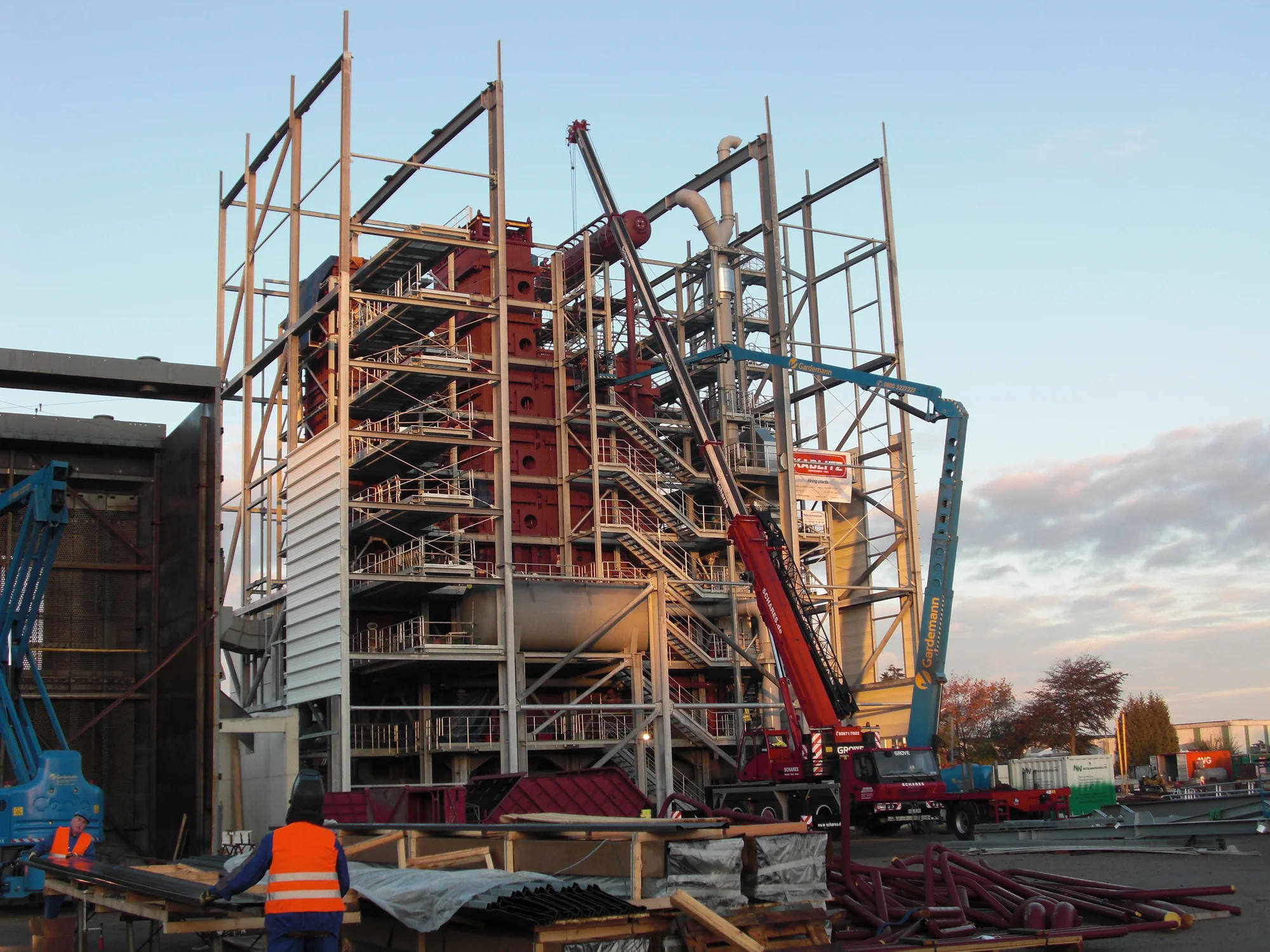
Kablitz built a biomass CHP plant with combined heat and power. Depending on demand, the steam generated is used for power generation or to supply district heating.
In summer the plant can be operated in power-led mode to maximise electrical output. In winter it runs in heat-led mode to supply the district heating network reliably. A fluctuating energy demand thus becomes one of the plant's strengths.
Efficiency meets clean combustion
High output – low emissions.
Since different pollutants can occur when burning waste wood, the plant was equipped with extensive flue gas cleaning. A multi-stage SNCR system, an evaporative cooler and dry sorption with activated carbon and hearth furnace coke together ensure that the required emission values are reliably met.
Combustion is continuously monitored and controlled to ensure stable and efficient operation.
Built for difficult fuels
Robust, easy to maintain and designed for a long service life.
The fuel places high demands on the firing system and the downstream heat exchangers. The steam generator was therefore specifically designed to minimise the risks of corrosion and erosion. Should heating surfaces nevertheless need replacing, the design allows quick and easy access.
For the operator this means high availability and fewer unnecessary downtimes.
Result
An energy centre that keeps pace with demand.
The biomass CHP plant combines power generation and district heating in one flexible plant.
- Flexible mode of operationPower-led in summer, heat-led in winter – depending on what is needed.
- 10 MW electrical outputThe plant reliably generates electricity from waste wood.
- 24 MW process heatAdditional heat can be used for the energy supply.
- Reliable district heatingIn winter, the customer's own district heating network is supplied with heat as required.
- Reliable emission valuesMulti-stage flue gas cleaning ensures that the required limits are reliably met.
- Designed for demanding fuelsThe design takes the special requirements of waste wood into account and reduces the risks of corrosion and erosion.
Technology
Wiesbaden, Germany
- Thermal input
- 38.4 MW
- Steam output
- 49 t/h
- Electrical output
- 10 MW
- Process heat output
- 24 MW
- Steam temperature
- 425 °C
- Steam pressure
- 42 bar
- Fuel throughput
- approx. 100,000 t/year
- Calorific value range
- 2.7–3.8 kWh/kg
- Fuels used
- Waste wood A I–A IV
Inside the plant.
Every perspective.
Discuss a similar project
Next project / 2010