Movement as needed
Several independent hydraulic drives move the rows of grate bars. Speed and stroke length can be set for each drive.

Air-cooled grates are grate firing systems in which the supplied combustion air also cools the grate surface. Kablitz builds them as the reciprocating grate type 415, the horizontal grate type 400 for approx. 3–10 MW and the push-over grate type 116, for biomass and other solid fuels. Hydraulic drives and individually adjustable undergrate air zones match the combustion to the fuel.
Compare grate systems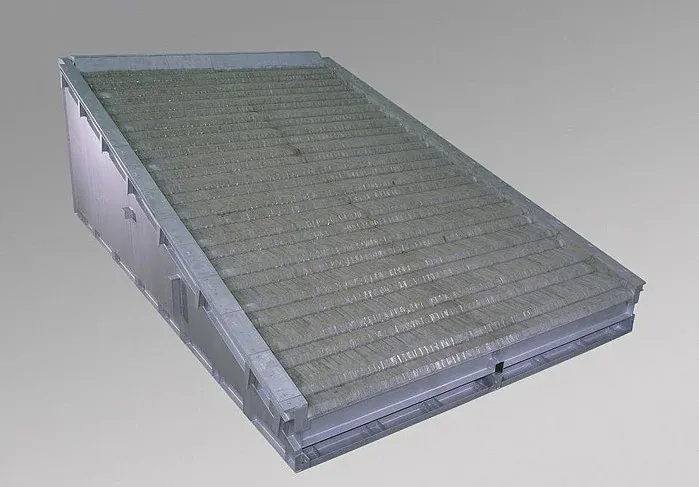
In an air-cooled grate, the supplied combustion air also cools the grate surface. A water-cooled grate removes heat through a separate cooling water circuit. Kablitz type 715 is the water-cooled version of the type 415 reciprocating grate. Individual grate rows can use air cooling or water cooling, also in combination. The right design follows from the fuel and the plant.
| Selection criterion | Air-cooled grate | Water-cooled grate |
|---|---|---|
| Cooling | The combustion air cools the grate surface | A cooling water circuit cools the grate bars |
| Kablitz types | 415 (reciprocating grate), 400 (horizontal, approx. 3–10 MW), 116 (push-over grate) | 715 (reciprocating grate based on 415); type 116 also water-cooled |
| Fuel | Biomass and other solid fuels; types 415 and 116 up to 65 % moisture content | High-calorific fuels |
| Conversion | Type 415 can be retrofitted with water cooling (type 715) | Reversion to pure air cooling is possible |
The grate rows move the fuel. Air flows up through the grate from below and cools the grate surface at the same time.
Schematic illustration of the principleFuel movement and air supply are matched to each other.
Several independent hydraulic drives move the rows of grate bars. Speed and stroke length can be set for each drive.
Individually adjustable undergrate air zones feed the combustion air through slots in the grate bars into the fuel bed.
The combustion air also cools the grate surface. The design is matched to the properties of the fuel.
Three designs from the existing product range at a glance.
| Grate type | Design | Application | Details |
|---|---|---|---|
| Grate 415 | Stepped reciprocating grate | Reciprocating grate for a wide range of solid fuels. | View type 415 |
| Grate 400 | Horizontal grate surface | Horizontal grate system for smaller outputs. | View type 400 |
| Grate 116 | Push-over grate stepped lengthwise | Push-over grate for clean fuels. | View type 116 |
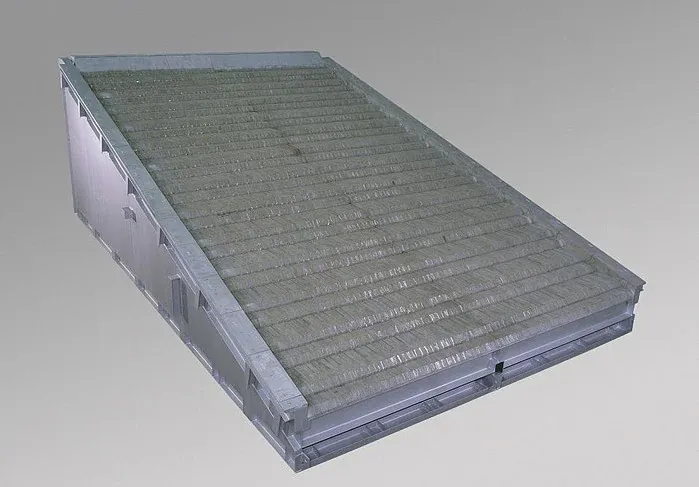
Reciprocating grate for a wide range of solid fuels.
Fixed and moving rows of grate bars alternate. Every second row moves the fuel forward; burnt-out fuel is discharged at the lower end of the grate via the slag hopper.
The grate bars in each moving row advance together, making the row less sensitive to foreign objects such as metal parts. Drives and undergrate air zones can be controlled independently.
Type 415 and the water-cooled type 715 are compatible. A later conversion to water cooling is possible.
Horizontal grate surface
Horizontal grate system for smaller outputs.
Type 400 is intended for small outputs of roughly 3 to 10 MW. Unlike the other types, it has a horizontal surface.
In this version, too, grate drives and undergrate air zones can be controlled individually.
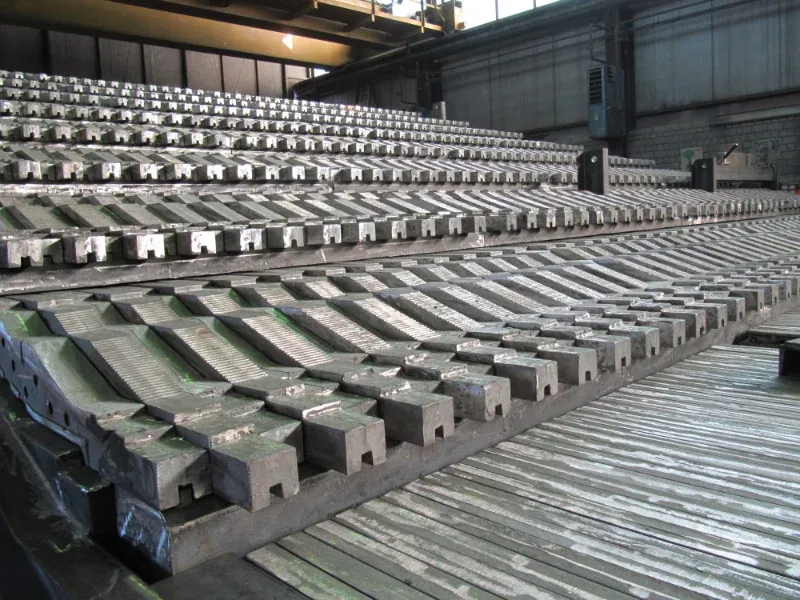
Push-over grate for clean fuels.
In each section row, a fixed and a horizontally moving grate bar lie side by side in pairs. Lengthwise, the sections form a stepped structure.
The stroke speed can be set independently for each drive cylinder. The undergrate air can be controlled section by section. Air-cooled and water-cooled versions are available.
Grate systems for biomass, waste wood and refuse-derived fuels
Ask Kablitz for the technical documents relevant to your product and application.
Last updated:
Request documents by emailDiscuss fuel, operating conditions and required output with Kablitz.
Get in touchDescribe the fuel, available quantity, moisture content and required energy output. An existing fuel analysis and site information help match the combustion system to the project.
Planning a biomass plant: the data you need for a first conversationYes. Technical checklist fields are optional: provide the data you already know and leave outstanding points for further discussion.
Start a project inquiry