Recovering residual heat
The glass tube heat exchanger is installed downstream to use further residual heat in the flue gas.

Using residual heat from flue gas: heating surfaces made of borosilicate glass and protected steel parts allow heat recovery even under corrosive conditions.
Discover the technology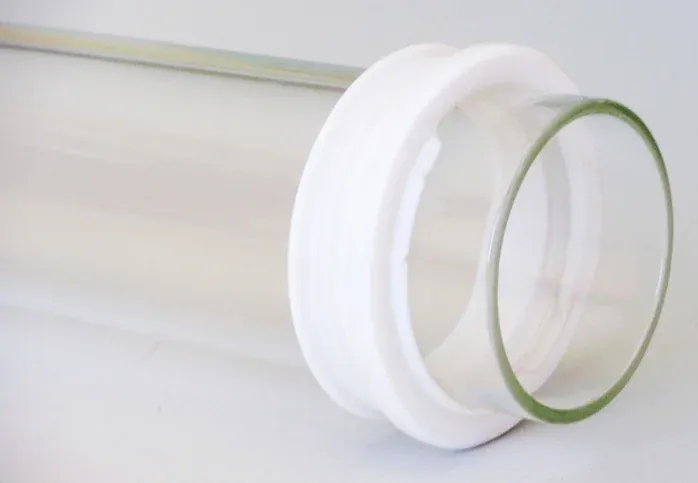
Borosilicate glass forms the heating surfaces. Steel parts in contact with flue gas are PTFE-coated, and the glass tubes are sealed with PTFE seals.
Original image · product detailMaterial, media and structure determine the specific design.
The glass tube heat exchanger is installed downstream to use further residual heat in the flue gas.
The heating surfaces are made of acid-resistant borosilicate glass. It is suited to applications where the flue gas may fall below the acid dew point.
Steel parts in contact with flue gas are PTFE-coated; the individual glass tubes are sealed with PTFE seals.
Material and media determine the design.
| Product | Design | Application | Details |
|---|---|---|---|
| Glass tube heat exchanger | Borosilicate glass | Heat recovery with heating surfaces made of borosilicate glass. | View details |
Heat recovery with heating surfaces made of borosilicate glass.
When further residual heat is extracted from the flue gas, the temperature may fall below the acid dew point. For this application, a glass tube heat exchanger is installed downstream.
The combination of borosilicate glass, PTFE-coated steel parts and PTFE seals provides corrosion protection. Actual suitability must be confirmed on the basis of the media composition and operating conditions.
Because of the materials used, the temperature of the heat-emitting medium is limited to 260 °C. This does not imply a general guarantee of the operating limits of every plant.
Recuperative heat exchangers
Ask Kablitz for the technical documents relevant to your product and application.
Request documents by emailDiscuss media, temperatures and installation conditions with Kablitz.
Fill in the questionnaireUseful data includes flue gas and air flow rates, inlet and outlet temperatures, operating pressure and allowable pressure losses. Where known, describe flue gas composition, dew point and available installation space.
Yes. Technical checklist fields are optional: provide the data you already know and leave outstanding points for further discussion.
Start a project inquiryRequest a heat exchanger
The questions follow the checklist our engineers use to prepare a quotation. Everything except your contact details is optional: leave open whatever you do not know yet.