
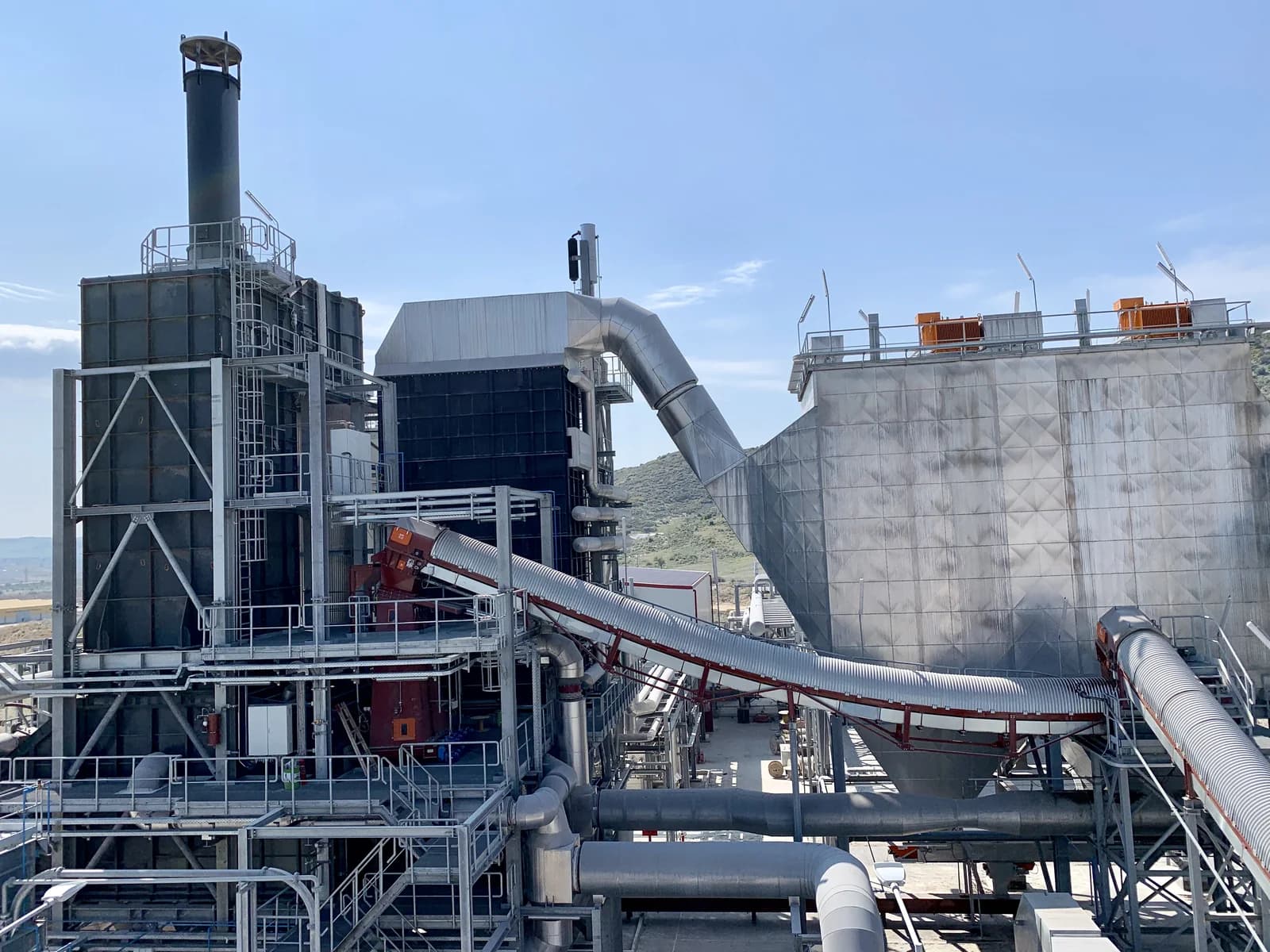
Near the port city of Volos, a plant for a chemical group generates heat and electricity from olive and cotton waste and sunflower husks – with 5 MW of electrical output from an ORC module.
Thermal input*
Thermal oil output
Electrical output of the ORC module
Challenge
Different fuels. A plant that has to stay flexible.
Near the Greek port city of Volos, an energy plant was built for a chemical group that generates heat and electricity from regionally available agricultural fuels. The particular challenge: the available fuels can change. The plant therefore had to work not just with one specific fuel but respond flexibly to different fuel qualities and future changes.
Olive waste, cotton waste and sunflower husks were available as fuels. Their different properties and changing availability place special demands on the firing system.
At the same time, the plant had to operate safely and reliably. With dusty fuels in particular, deposits and the risk of dust explosions had to be kept as low as possible.
Solution
A firing system that can handle changing fuels.
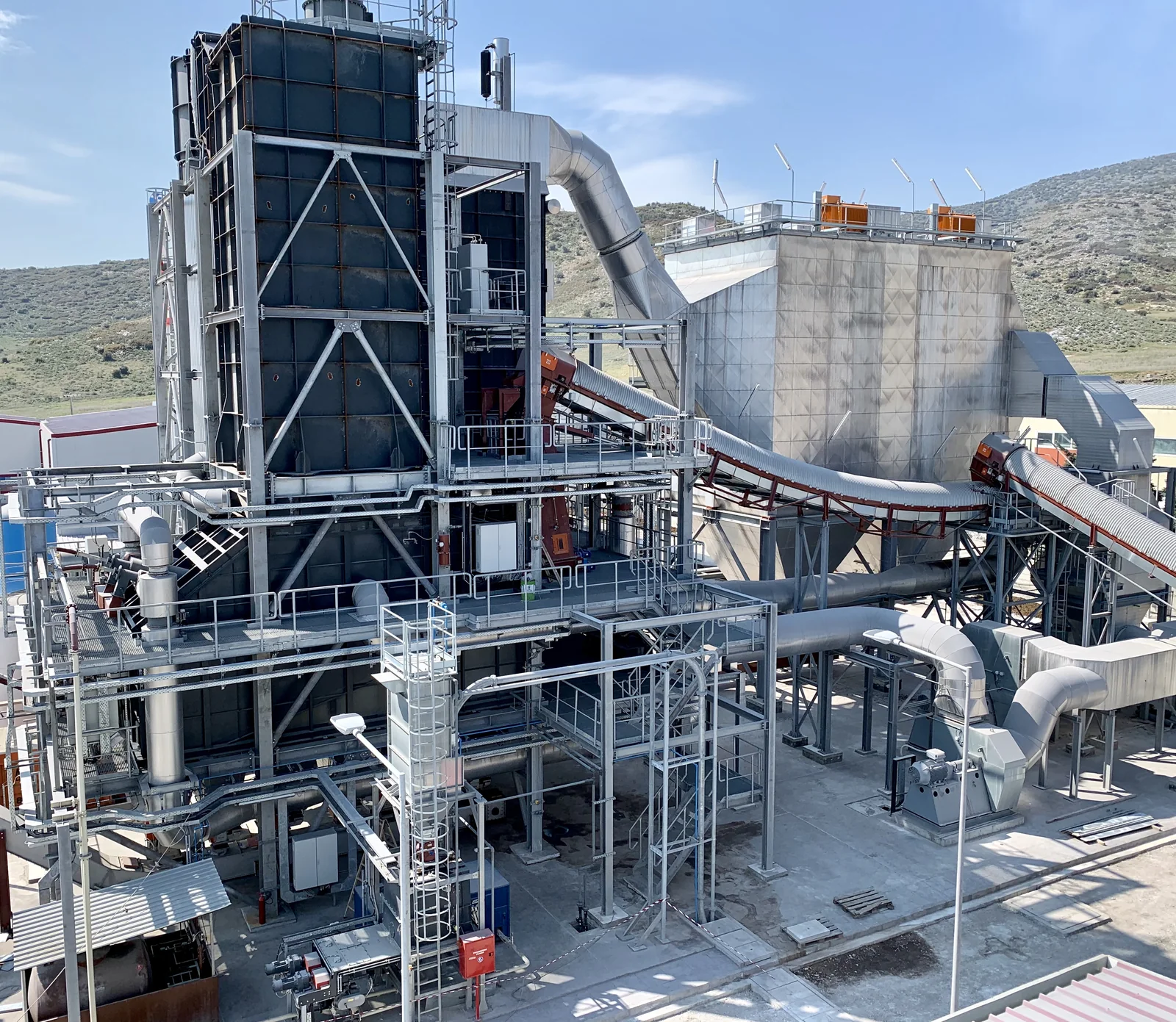
Kablitz developed a flexible firing concept matched to the different agricultural fuels. In addition to the grate firing, two separately operating granulate nozzles are used. This allows dusty fuels to be fed in and burned in a targeted way, independently of the grate firing.
This reduces possible dust deposits in the fuel system and helps minimise the risk of dust explosions. At the same time, the granulate nozzles allow a quick response to different load situations.
Heat that becomes electricity
Process heat creates additional energy.
The heat generated is used via a thermal oil circuit. A downstream ORC module additionally converts part of this heat into electrical energy. Besides the heat required, this produces 5 MW of electrical output that is fed into the local power grid.
Designed entirely for flexibility
Different fuels today. New possibilities tomorrow.
From the outset, the firing system was designed for a wide range of agricultural fuels. The plant thus remains flexible even if fuel supply, quality or composition change.
For the operator this means greater independence in the choice of fuel and a plant that can grow with requirements in the long term.
Result
Getting more out of available fuels.
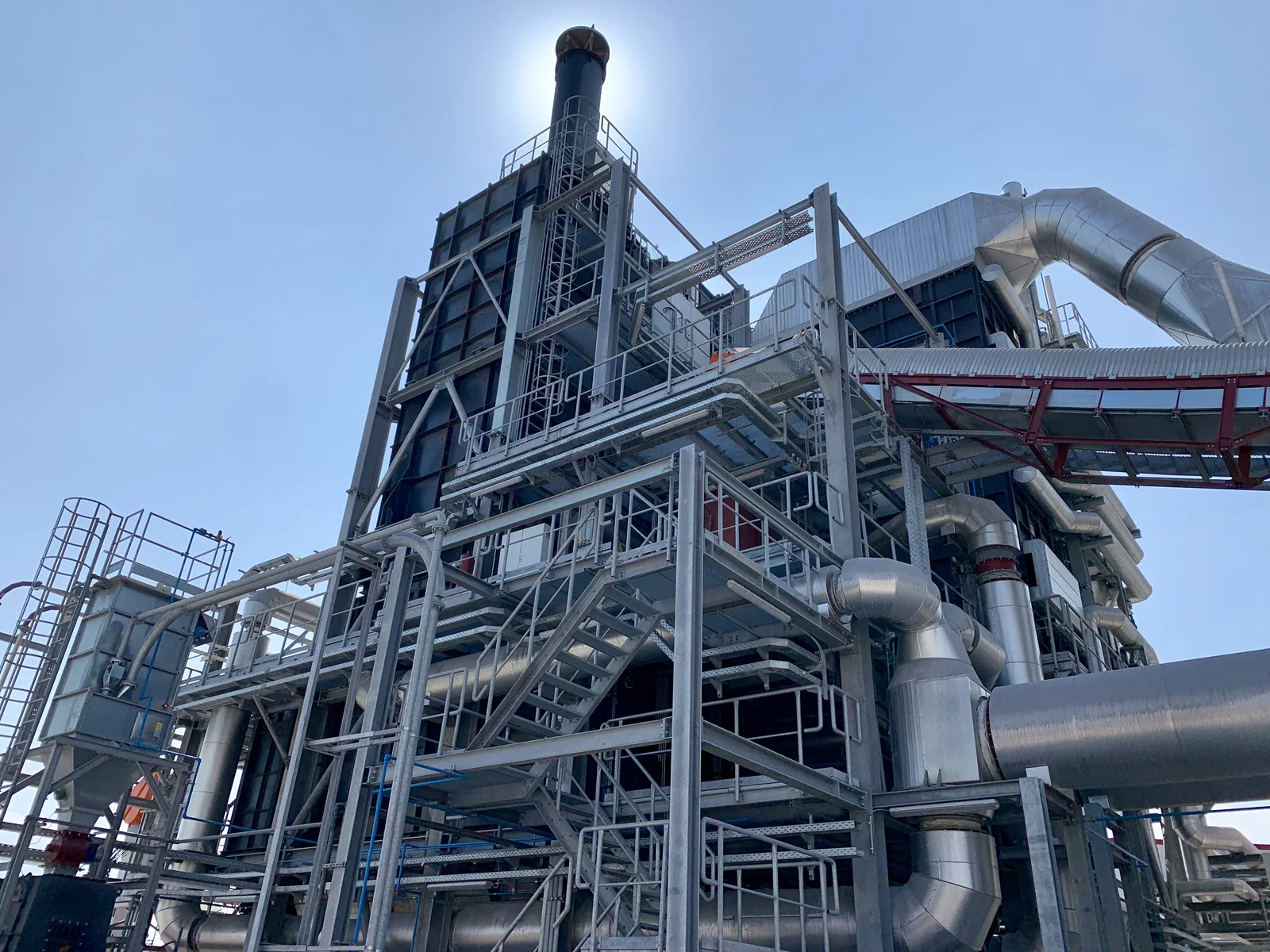
The solution developed by Kablitz allows different agricultural fuels to be used reliably for energy. The combination of flexible firing, thermal oil technology and ORC power generation enables versatile use of the energy.
- Flexible fuel useOlive waste, cotton waste and sunflower husks can be used as fuels.
- More energy from biomassThe heat generated is not only used for the process but also for power generation via the ORC module.
- 5 MW electrical outputThe ORC module generates electrical energy that is fed into the local power grid.
- Safe and flexibleSeparate feeding of granulate and the flexible firing support safe and stable plant operation.
- Ready for the futureThe plant concept also takes changes in fuels and future requirements into account.
Technology
Volos, Greece
- Fuel throughput
- approx. 40,000 t/year
- Thermal input*
- 21 MW
- Thermal oil output
- 18.8 MW
- Electrical output of the ORC module
- 5 MW
- Thermal oil flow temperature
- 315 °C
- Flue gas temperature
- 250 °C
- Calorific value range
- 3.19–4.86 kWh/kg
- Olive waste · cotton waste · sunflower husks
- 3 fuel types
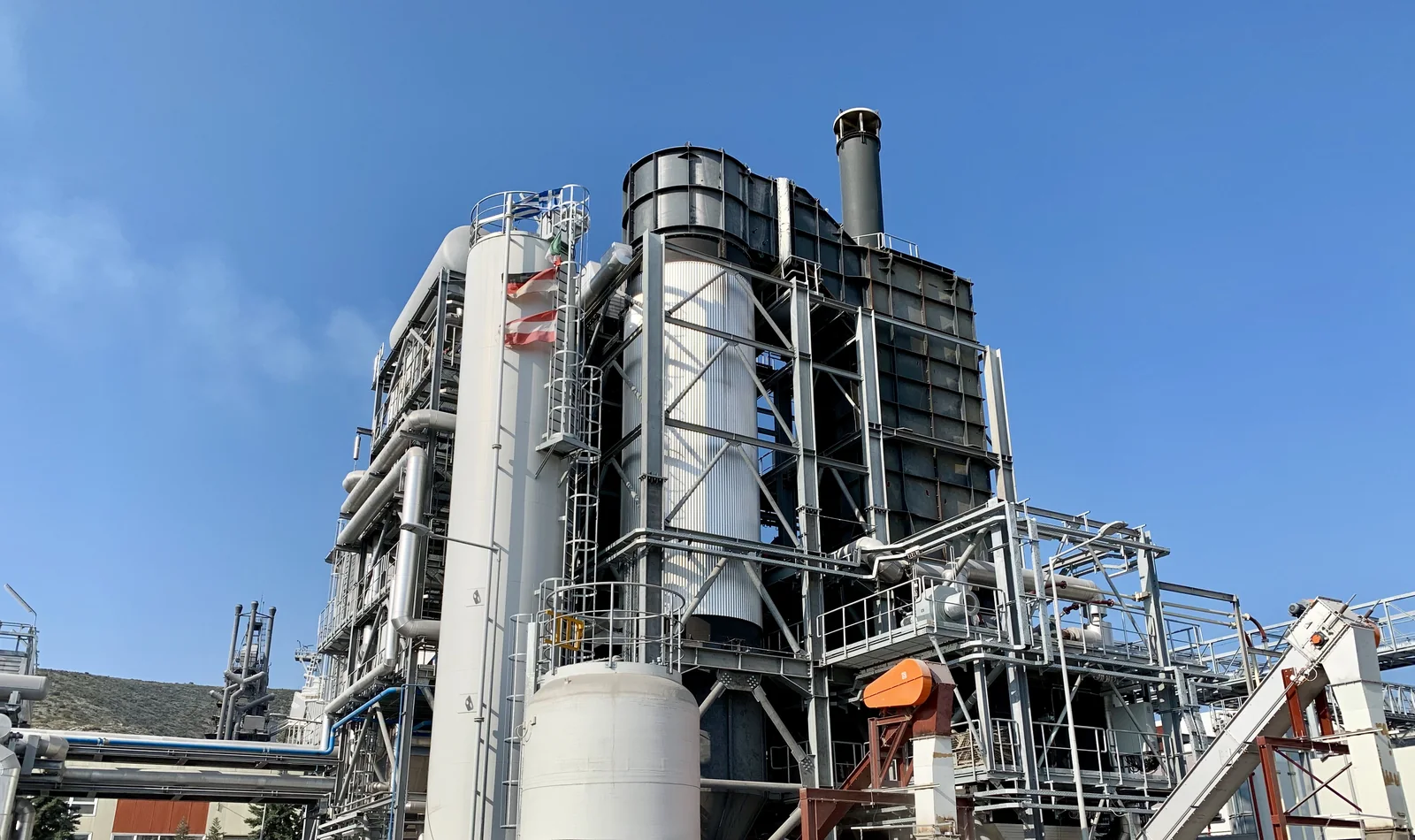
Inside the plant.
Every perspective.
Discuss a similar project
Next project / 2016