
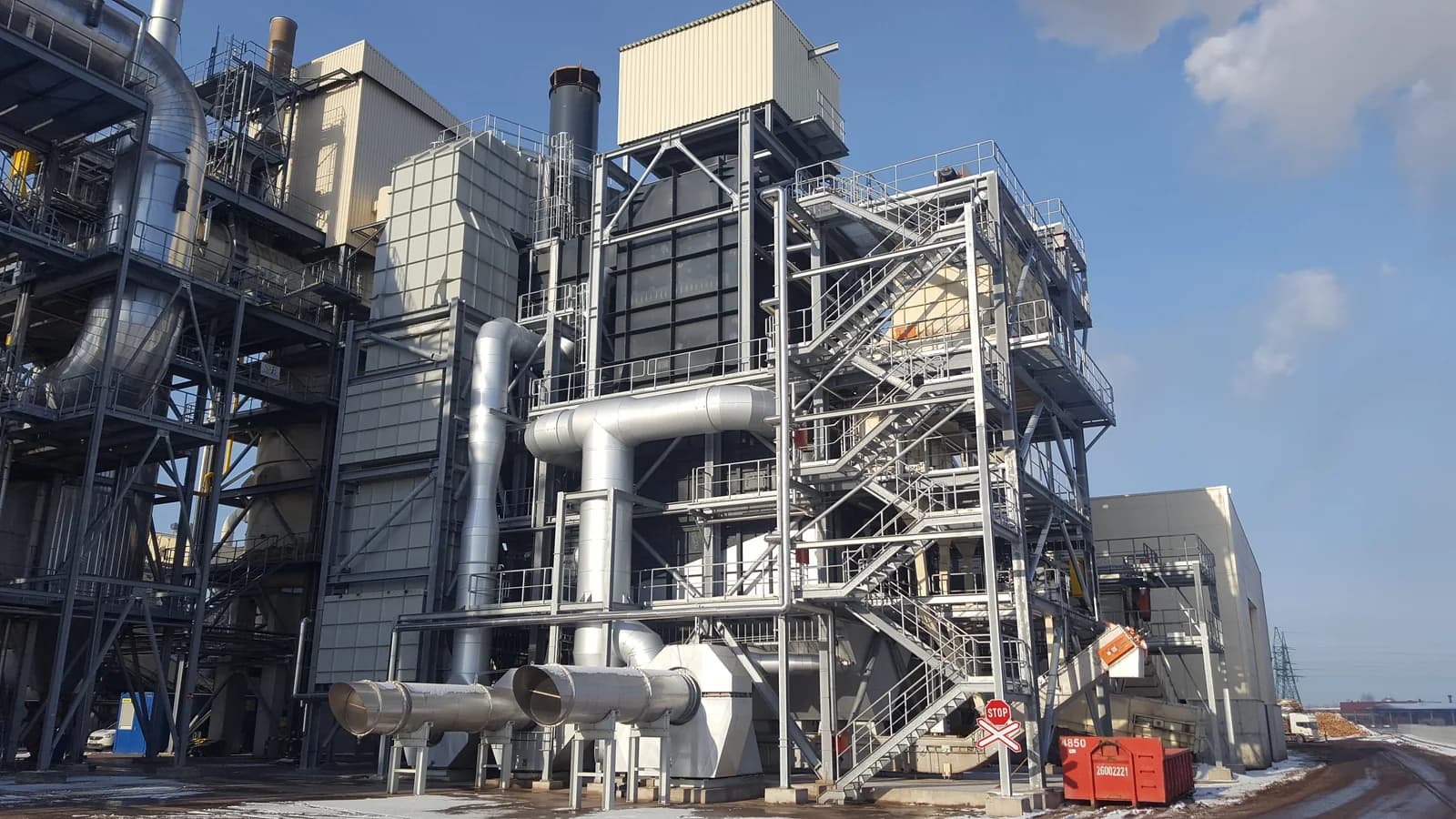
As part of a plant expansion, the customer switched from fossil fuels to biomass: a residual wood firing system supplies hot gas directly for drying – integrated into the existing infrastructure.
Thermal input
Hot gas output
Challenge
Keep using existing plants. Rethink the energy supply.
As part of the expansion of its plant, the customer also wanted to modernise its energy supply and become less dependent on fossil fuels in the long term.
The expansion brought new requirements for the energy supply. At the same time, existing components and limited space had to be taken into account. The new solution therefore had to be compact, reliable and quick to implement – with as little intervention in ongoing production as possible and within a tight schedule.
The customer also wanted to take the opportunity to switch from fossil fuels to biomass and thus reduce its energy costs in the long term.
Solution
Residual wood becomes an energy source for production.
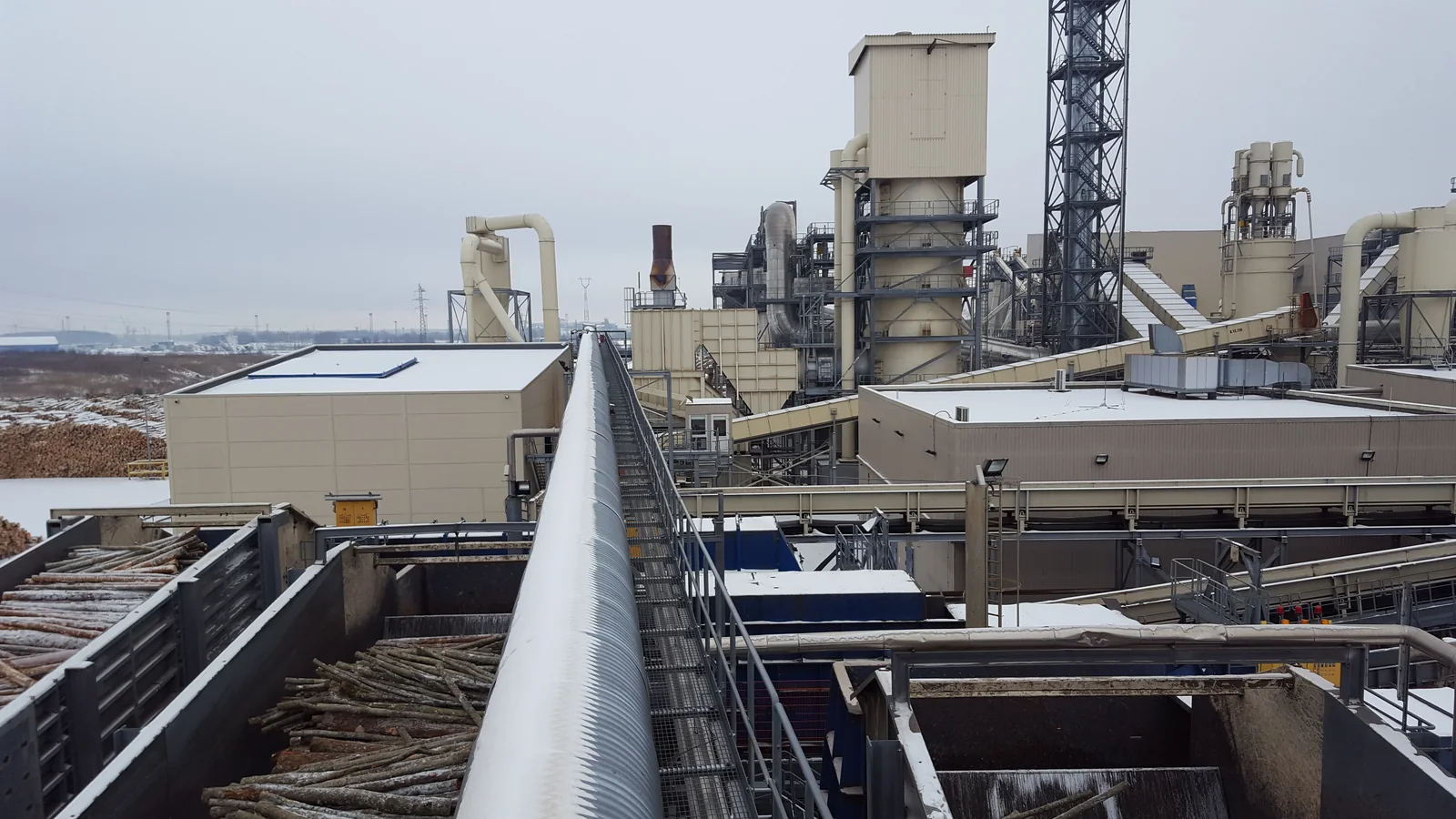
Kablitz built a hot gas generator with residual wood firing that makes optimum use of the existing infrastructure and integrates the heat generated directly into the production process. Bark, forest residues and production waste can be used as fuels.
The hot gases pass through a combustion and afterburning chamber and are then brought to the required temperature in a mixing cooler.
Efficient. Direct. Integrated into the process.
The energy arrives where it is needed.
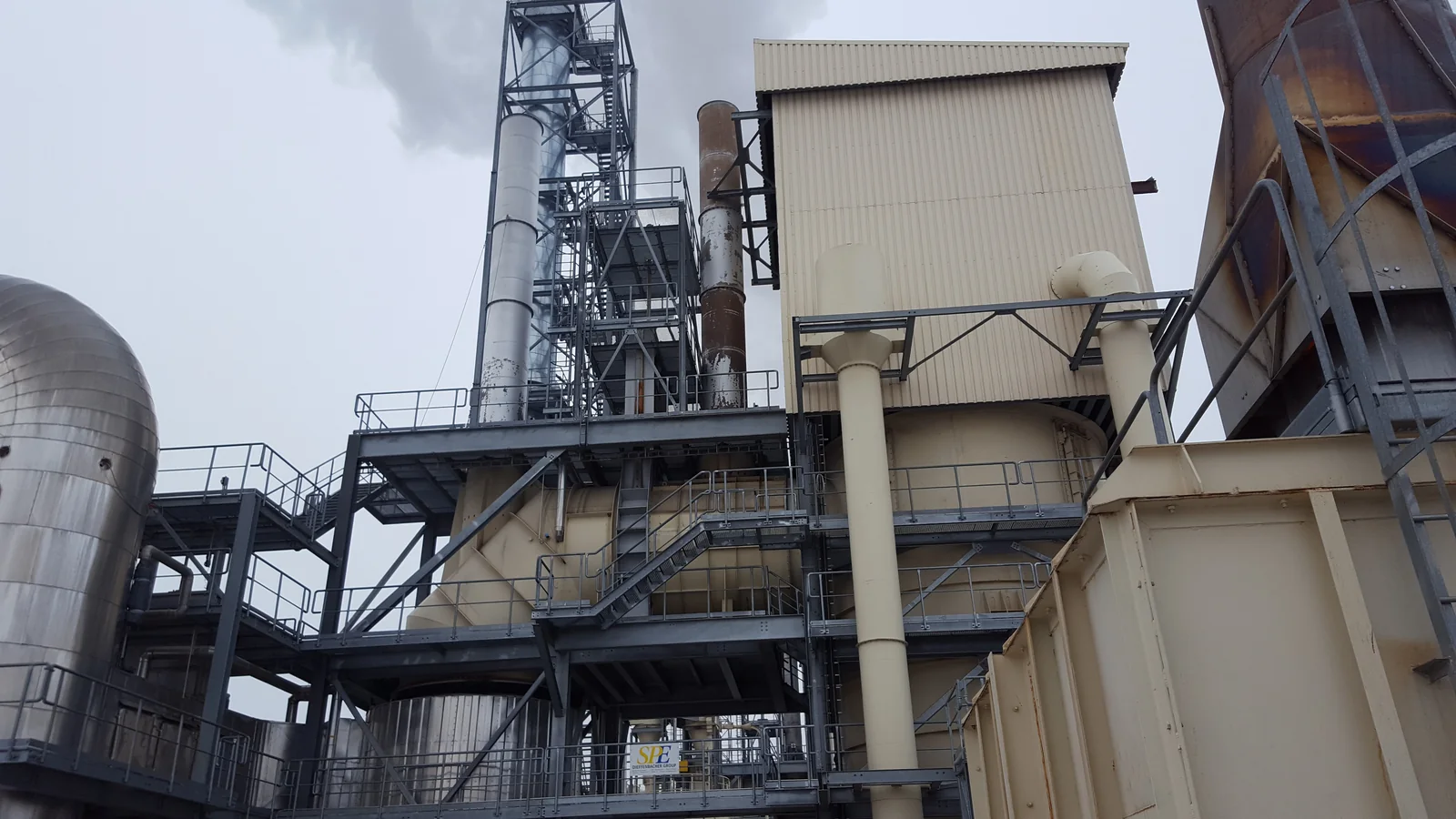
The conditioned hot gases are fed directly into the production process and used for drying. As a result, the heat generated is used almost entirely in the production process. At the same time, large quantities of fly ash are separated before the flue gas path, relieving the downstream equipment.
The switch to biomass
Less fossil energy. More value from existing resources.
By switching to biomass, the customer can use its existing residues for energy while reducing the use of fossil fuels. This lowers energy costs in the long term and improves the environmental balance of production.
Thanks to high-quality components and a high degree of automation, the plant remains reliable and low-maintenance – without compromising on availability.
Result
Residual wood becomes a reliable part of the energy supply.
The new plant combines the requirements of production with a more efficient and sustainable energy supply.
- Biomass instead of fossil fuelsBark, forest residues and production waste are used directly as energy sources.
- Lower energy costsUsing existing residues reduces dependence on fossil fuels.
- High energy efficiencyThe hot gases generated are used almost entirely for the production process.
- Existing infrastructure kept in useExisting components and the available space were used optimally.
- Reliable productionAutomation and high-quality components enable stable operation with little additional staff effort.
- More sustainable productionThe switch to biomass improves the energy balance and reduces fossil CO₂ emissions.
Technology
Riga, Latvia
- Thermal input
- 49 MW
- Hot gas output
- 49 MW
- Fuel throughput
- approx. 223,000 t/year
- Hot gas temperature
- 825 °C
- Calorific value range
- 1.8–2.9 kWh/kg
- Fuels used
- Bark · forest residues · production waste
Inside the plant.
Every perspective.
Discuss a similar project
Next project / 2017