
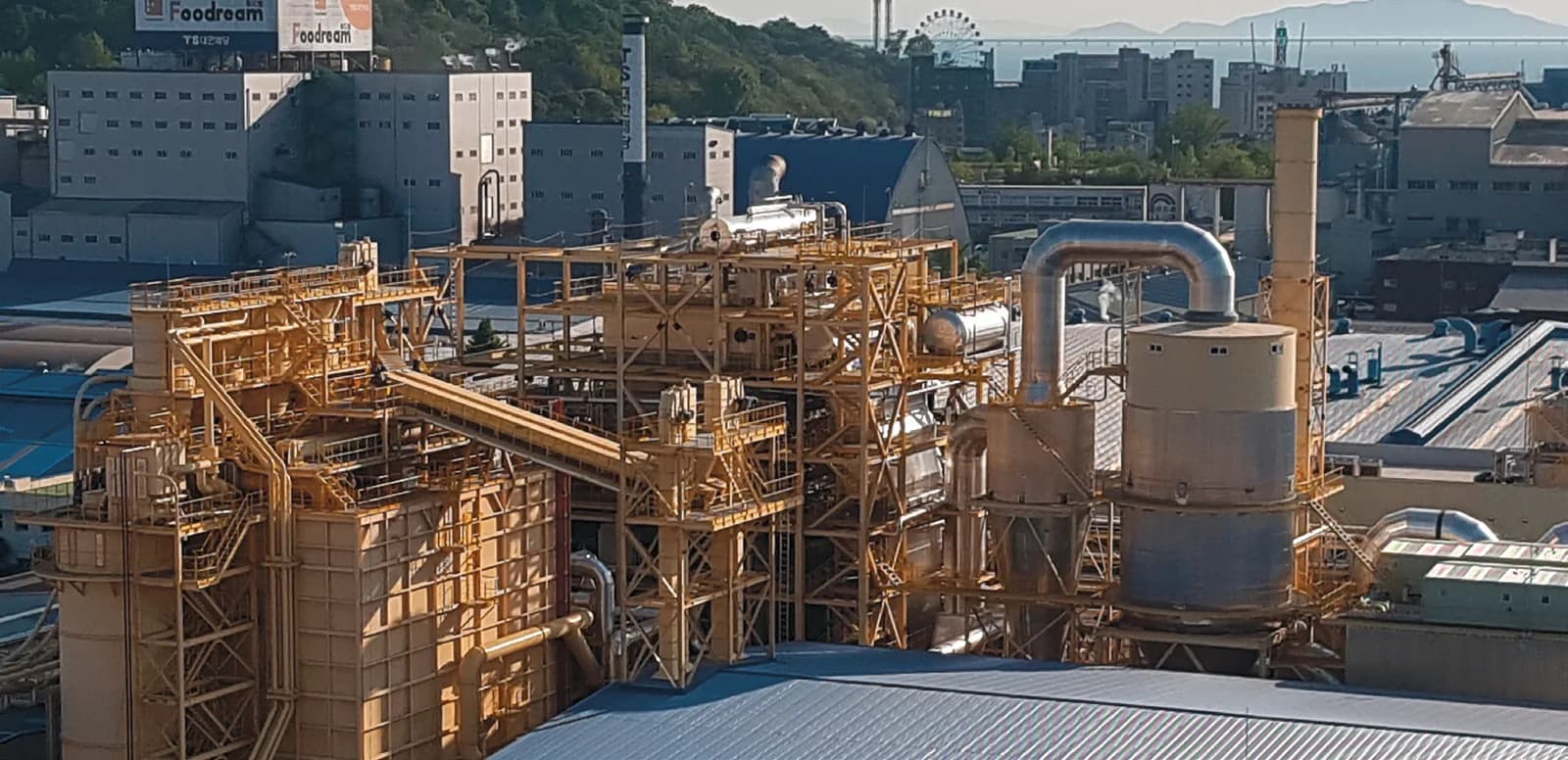
For one of Korea's largest wood-based panel manufacturers, a single firing system produces steam, electricity and process heat for the entire site from MDF production residues.
Steam output
Electrical output
Process heat output
Challenge
Different residues – one common energy source.
For one of Korea's largest wood-based panel manufacturers, Kablitz developed a plant that uses residues from MDF production directly for energy.
MDF production generates different wood residues that were to be used for energy. The customer needed a flexible solution that could reliably process various production wastes with just one common firing system.
At the same time, the energy generated was to be used as versatilely as possible: for power generation, for process heat and for heating the MDF presses. A further challenge was the high calorific value of the waste wood, which placed special demands on the firing system.
Solution
One firing system, many possibilities.
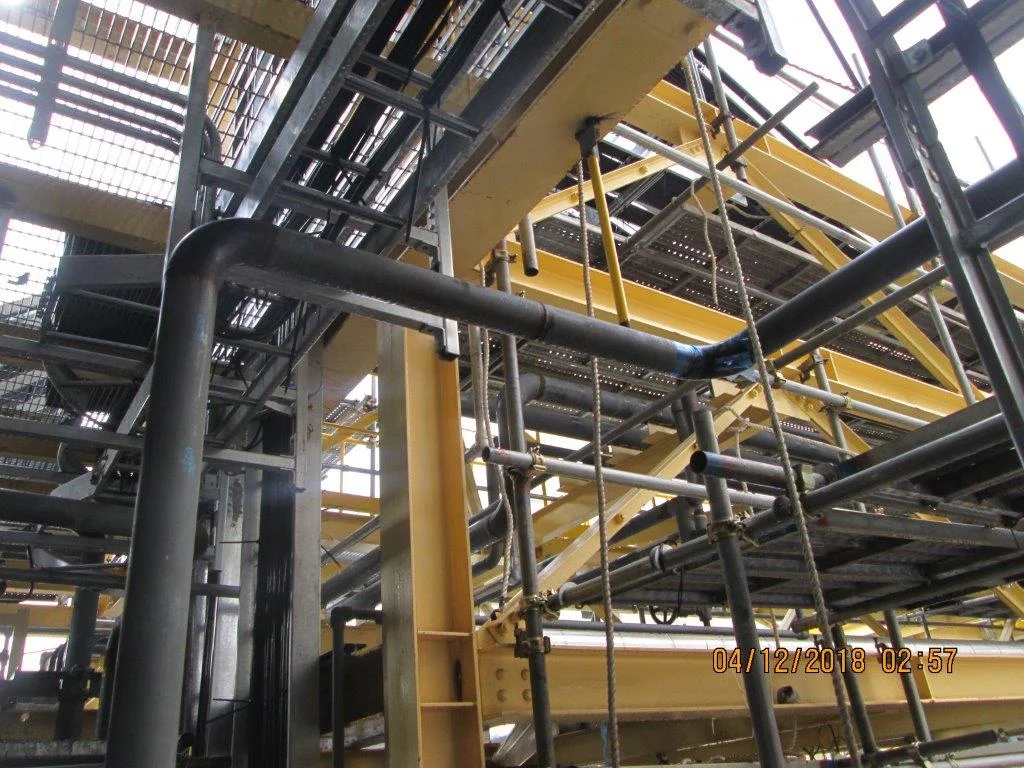
Kablitz built a combined superheated steam and thermal oil boiler plant with a common firing system. The water-cooled reciprocating grate type 715 is specifically designed for fuels with a high calorific value. In addition, dust and granulate nozzles allow different production residues to be burned flexibly.
The customer can thus use its residues via the grate or via the dust/granulate nozzles, depending on their nature.
Using energy where it is generated
Production residues become energy for the entire production.
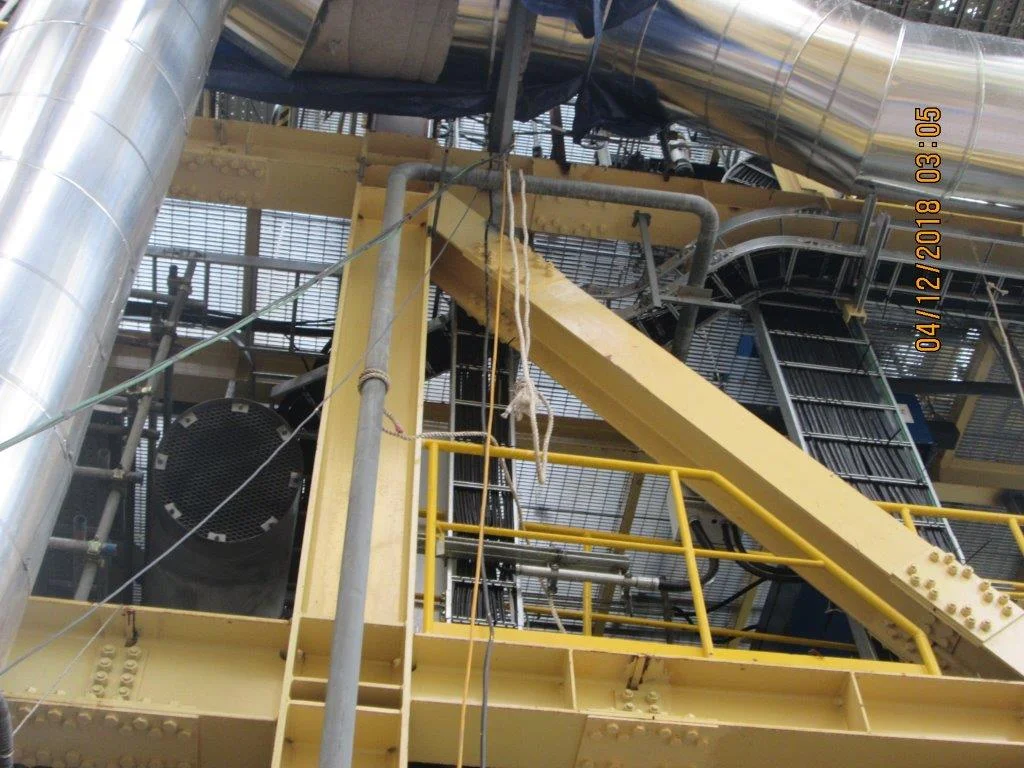
The live steam is used, among other things, for a turbine that generates electricity. At the same time, the plant supplies process heat and feeds thermal oil to two MDF presses via a ring main of around 300 metres.
Production residues thus become usable energy directly on site – electricity and heat are generated where they are needed.
Flexibility for changing requirements
When demand changes, the plant adapts.
The combination of grate firing and dust/granulate nozzles allows output to be adjusted quickly to different heat consumers. The plant can therefore not only use different production residues but also respond flexibly to changes in energy demand.
Result
Production residues become the company's own energy source.
With the Kablitz plant, the customer can use its own production waste for energy and cover part of the energy needs of its production site.
- Using its own residuesWaste from MDF production is not simply disposed of but becomes an energy source.
- Flexible fuel useDifferent residues can be processed via grate and dust/granulate firing.
- Electricity and heat from one plantThe energy generated is available both for power generation and for process heat.
- Supplying productionThermal oil is transported to two MDF presses via a ring main of around 300 metres.
- Less dependence on external energy sourcesPart of the energy demand is covered by the company's own production residues.
- Flexible outputThe plant adapts its output to different heat consumers and production conditions.
Technology
Incheon, South Korea
- Fuel throughput
- approx. 140,000 t/year
- Steam output
- 64 t/h
- Electrical output
- 9.9 MW
- Process heat output
- 24 MW
- Thermal oil output
- 7.2 MW
- Thermal input
- 38.4 MW
- Steam temperature
- 425 °C
- Steam pressure
- 64 bar
- Calorific value range
- 2.9–5.2 kWh/kg
- Heat line to the production lines
- approx. 300 m
- Fuels used
- Waste wood A I–A IV
Inside the plant.
Every perspective.
Discuss a similar project
Next project / 2017